









Hydraulic Pressure Formula – How to Calculate It and Where It Matters
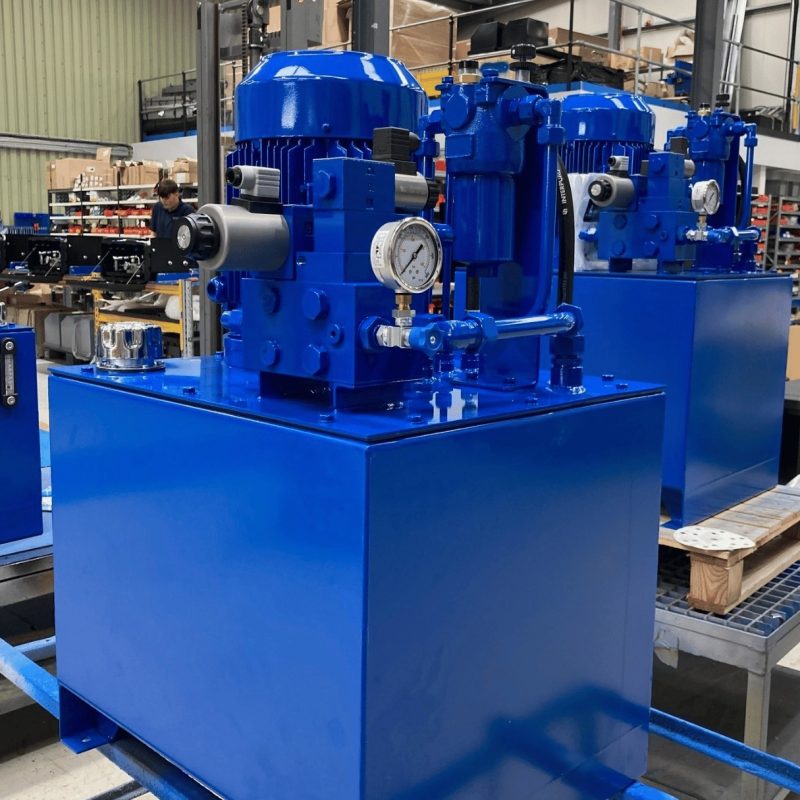
If you’re working on a hydraulic system and you’re not sure how to size components or figure out how much pressure you need, you’ll probably be asking yourself ‘What’s the formula for hydraulic pressure?’ In which case you’re not alone. Whether you’re designing a system from scratch or troubleshooting an underperforming power unit, knowing how to calculate hydraulic pressure properly is essential.
What is Hydraulic Pressure?
Hydraulic pressure is the force per unit area applied within an enclosed fluid. It’s what allows a small piston to lift a heavy vehicle or power an industrial press. The standard unit of pressure is the Pascal (Pa), but in hydraulics, we often use bar or PSI (pounds per square inch) instead because the Pascal is just too small to be practical.
You’ll commonly see system pressures ranging from:
- 50 to 150 bar in mobile or agricultural machinery
- 180 to 250 bar in industrial setups
- Up to 700 bar in high-pressure tooling or jacks
Hydraulic Pressure Formula (Main Keyword)
The base equation is:
Pressure = Force ÷ Area
This is the starting point for almost all hydraulic calculations. If you know the force you want to apply and the area it’s acting on, you can calculate the pressure required.
Units to watch out for:
- Force is in Newtons (N) or pounds (lbf)
- Area is in square metres (m²) or square inches (in²)
- Pressure will then be in Pa, bar, or PSI
To convert to bar or PSI, multiply or divide by the relevant constants:
- 1 bar = 100,000 Pa
- 1 PSI = 6.89476 kPa
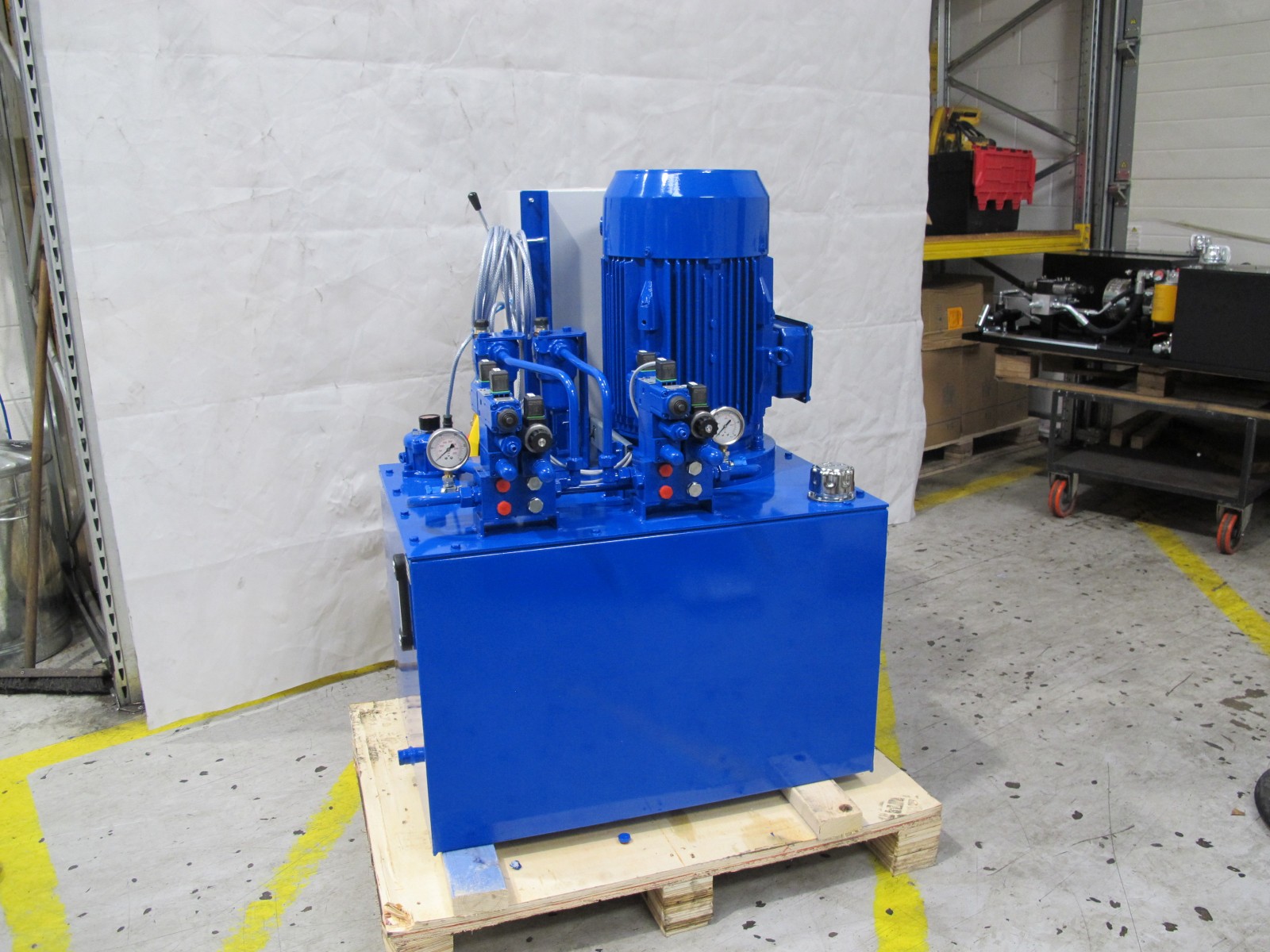
Applying the Formula to a Hydraulic Lift
As an example, say you’ve got a hydraulic car lift using a piston with a diameter of 100 mm (0.1 m). You want to lift a load of 10,000 N.
First find the piston area:
A = π × (D ÷ 2)²
A = 3.1416 × (0.1 ÷ 2)² = 0.00785 m²
Then plug it into the formula:
Pressure = 10,000 N ÷ 0.00785 m² = 1,273,885 Pa
Convert that to bar: 1,273,885 ÷ 100,000 = 12.74 bar
So, to lift that load, you’ll need at least 12.74 bar of hydraulic pressure. But that’s ideal, real-world losses mean you’ll want a higher working pressure.
Equal Pressure Transmission with Pascal’s Law
The maths only works because of Pascal’s Law, which says that any pressure applied to an enclosed fluid is transmitted equally in all directions.
This is why a small piston can move a large piston, provided the fluid is properly contained and doesn’t compress. The pressure you apply on one side is felt the same way across the system, that’s the principle behind most hydraulic presses, jacks and automotive lifts.
How to Calculate Force or Area Instead
You can rearrange the formula depending on what you’re trying to find:
- Force = Pressure × Area
- Area = Force ÷ Pressure
So if you’ve got a pump that delivers 200 bar and a cylinder with a 50 mm bore, you can work out how much force it’s producing:
A = π × (0.05 ÷ 2)² = 0.00196 m²
F = 200 × 10âµ Pa × 0.00196 m² = 3,920 N
Why Hydraulic Pressure Calculations Matter
Whether you’re specifying a pump, pipe size or relief valve, you can’t make informed decisions without knowing the pressure involved.
Here’s where proper pressure calculations come into play:
- Sizing pumps and cylinders
- Selecting pipe and hose ratings
- Preventing over-pressure failures
- Maximising system efficiency
- Reducing wear from heat and turbulence
Incorrect assumptions about pressure can cause either underperformance or component damage. Both cost money.
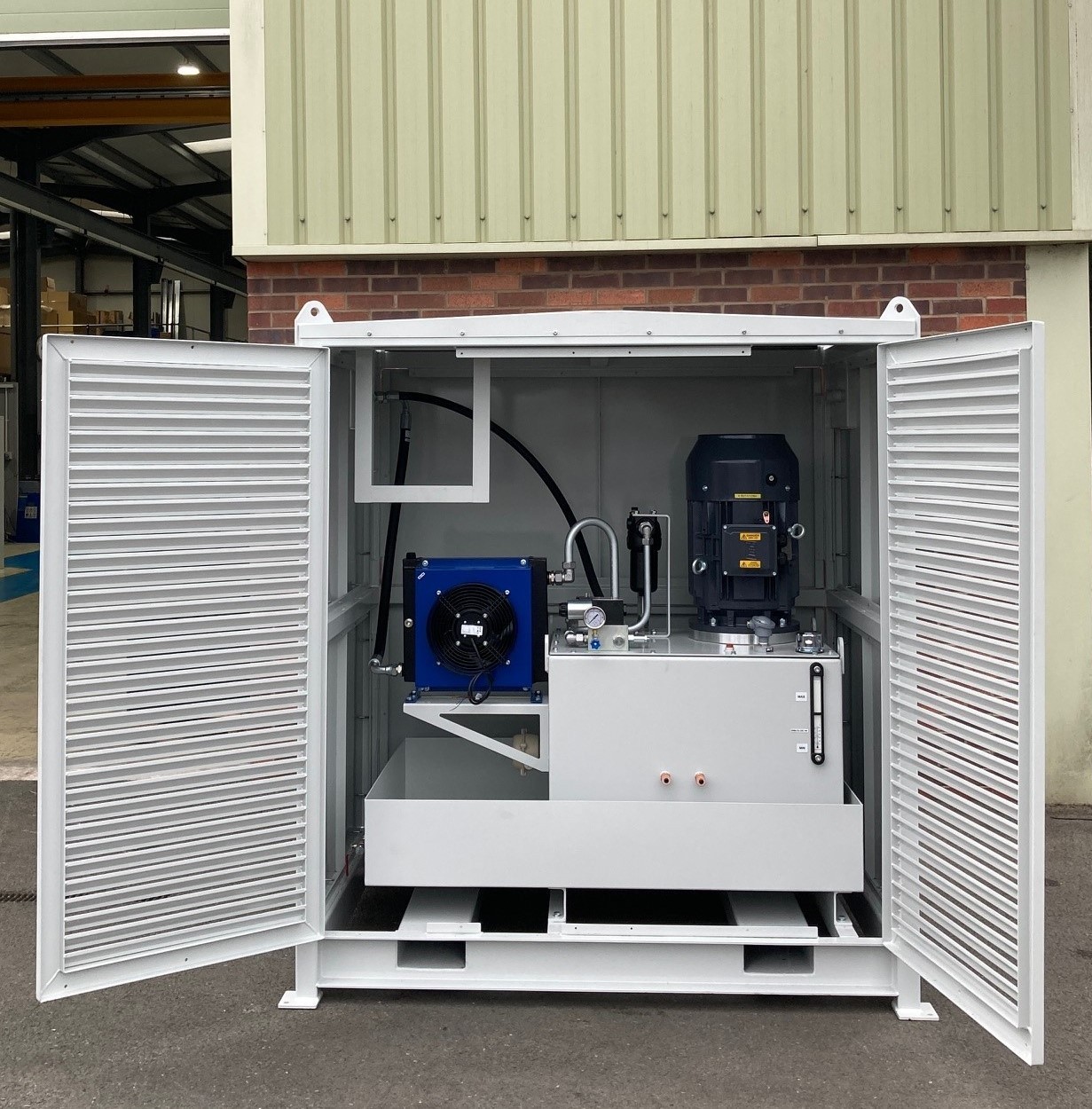
Using a Hydraulic Pressure Calculator
There are plenty of online calculators (just like ours here), but they’re only as good as the inputs you give them.
Input requirements:
- Piston diameter or area
- Desired force or pressure
- Units (be consistent, don’t mix metric and imperial)
What to check:
- If the area is automatically calculated
- If conversions are accurate
- That it doesn’t assume ideal efficiency (most systems lose ~5-10%)
Remember that calculators don’t know your system’s temperature, fluid viscosity, or pipe length. All of those can affect the actual pressure required.
Things That Affect Real Hydraulic Pressure
While the formula’s clean, reality’s messier. You might calculate 150 bar, but your system actually needs 170–180 bar. Why?
Common issues:
- Pressure drops across long pipes or small bore fittings
- Fluid temperature changing viscosity
- Internal leaks in worn cylinders or valves
- System inefficiency. Pump slip, valve cracking, etc.
You’ll rarely get textbook results. Always leave a buffer and check component ratings, especially if you’re dealing with a high-pressure application.
Hydraulic System Examples – Press to Lift
Here are a few places hydraulic pressure formula can come into play:
- Hydraulic presses: determining how big a cylinder you need to press metal sheets
- Automotive hydraulic lifts: making sure the pressure from the pump is enough to lift a car
- Industrial equipment: adjusting pressure to maintain performance while avoiding overloads
- Mobile plant: ensuring hydraulic pipes and hoses match peak pressure ratings
In each case, knowing the force, piston area, and target pressure helps you spec the system properly.
FAQs
What’s the formula for hydraulic pressure?
Pressure = Force ÷ Area. Use it to work out how much pressure is needed based on the load and cylinder size.
What is Pascal’s Law?
It says that pressure applied to an enclosed fluid is transmitted equally in all directions, the reason hydraulic systems work.
Can I use any fluid in a hydraulic system?
No. You need hydraulic oil with the correct viscosity, temperature stability, and lubricating properties. Water isn’t suitable.
Why is my hydraulic pressure too low?
It could be due to pump wear, internal leakage, valve issues, or pipe diameter being too narrow for the flow.
How do I convert PSI to bar?
Divide PSI by 14.5 to get bar. Or multiply bar by 14.5 to get PSI.
Final Word
Hydraulic pressure formula is the foundation of any hydraulic system design or diagnosis. Get your force, area, and units right, and you’ll be well placed to build an efficient, safe and reliable setup.
If you’re unsure about the results you’re seeing or want help selecting the right components, Hydrastore can provide the engineering support and hydraulic system know-how to back you up.