









Open vs Closed Centre Hydraulic Systems Explained
Understand the difference between open centre and closed centre hydraulic systems, how each controls flow and pressure, and where each type is commonly used.

When you’re working with a hydraulic system, one of the first real design decisions is whether it’s an open centre or closed centre system. Get this wrong, and the system won’t behave how you expect. Get it right, and everything flows, pressure builds properly, and control feels spot on.
This isn’t about preference. It’s about how fluid flow, system pressure, and the hydraulic circuit are set up to perform work.
What Is an Open Centre Hydraulic System?
An open centre system is the most straightforward type of hydraulic circuit.
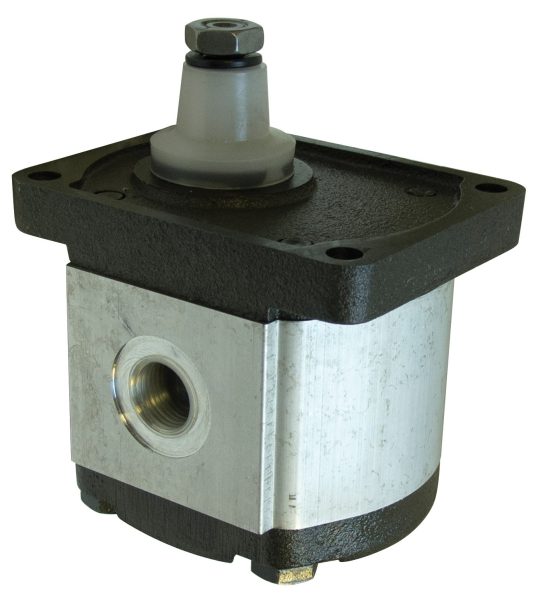
In this setup, the hydraulic pump, usually a fixed displacement pump, delivers continuous flow. When the directional control valve is in neutral, fluid is allowed to flow freely back to the reservoir through a central passage.
That’s the key behaviour:
- Flow is continuous
- Pressure is intermittent
When no hydraulic function is being used, oil moves from the pump, through the valve, and straight to tank. There’s little resistance, so system pressure stays low.
The moment you operate the control valve, that open path closes. Fluid is redirected to a hydraulic cylinder or actuator, and pressure builds to perform work.
You’ll see open centre hydraulics used in:
- Basic machinery
- Agricultural equipment
- Smaller mobile systems
It’s simple, reliable, and easy to maintain. The trade-off is efficiency. Since flow is always moving, energy is constantly being used, even when no work is being done.
What Is a Closed centre Hydraulic System?
A closed centre hydraulic system works in a completely different way.
When the control valve is in neutral, fluid is blocked within the hydraulic circuit. There’s no open path back to tank. Instead, flow stops, and pressure remains within the system.
That changes everything:
- Flow is intermittent
- Pressure is continuous
The pump used here is typically a variable displacement pump, often pressure compensated. Instead of pushing constant flow, it adjusts output based on demand.
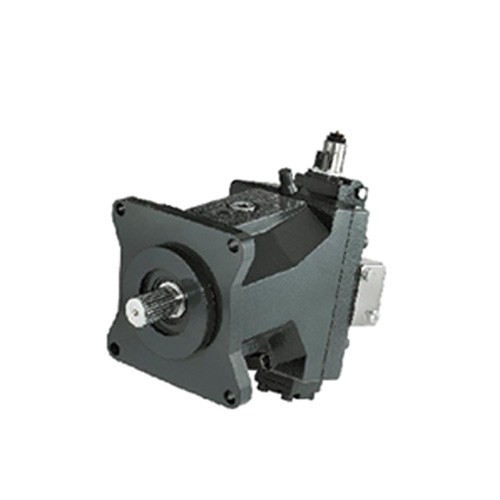
When no function is being used, the pump reduces its displacement. It maintains standby pressure at the directional control valve, ready for instant response.
Once a valve is actuated, the pump increases flow and directs oil where needed. There’s no wasted movement of fluid back to the tank.
You’ll find closed centre hydraulics in:
- High-performance machinery
- Complex industrial systems
- Equipment needing multiple simultaneous functions
This setup is more efficient and offers better control, though it’s more complex in system design.
Open and Closed centre Hydraulics: The Core Difference
The difference between open and closed centre systems comes down to what happens when the valve is in neutral.
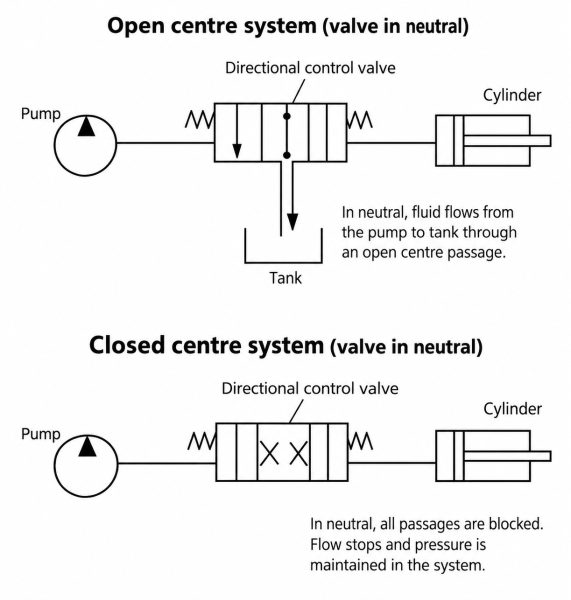
In an open centre system, oil flows continuously through a central passage within the directional control valve and returns to tank. The system only builds pressure when work is required.
In a closed centre system, the valve blocks flow in neutral. Pressure is maintained within the system, and the pump adjusts output to match demand.
That leads to a noticeable difference in behaviour:
- Open centre: flow is continuous and pressure is intermittent
- Closed centre: pressure is continuous and flow is intermittent
This single difference drives how the entire hydraulic system performs.
Open Loop vs Closed Loop Systems (Where They Fit In)
There’s often confusion between open loop vs closed loop and open and closed centre hydraulics. They’re not the same thing, but they do overlap.
An open loop system refers to fluid returning to the reservoir after use. A closed loop hydraulic system circulates fluid between pump and actuator.
Open and closed centre refers to valve design and flow path in neutral.
You can have:
- Open centre in an open loop system
- Closed centre in an open loop system
- Closed loop hydraulic system with closed centre control
So when comparing open vs closed, make sure you’re talking about centre configuration, not loop design.
System Design Considerations
Choosing between open centre or closed centre comes down to how the hydraulic system depends on flow and pressure control.
An open centre system suits applications where:
- Only one function is used at a time
- Simplicity matters
- Cost needs to stay low
A closed centre system is used where:
- Multiple functions run at once
- System pressure must be maintained
- Energy efficiency matters
Closed centre setups allow better load sharing across multiple actuators. Open centre systems struggle with that, since flow follows the path of least resistance.
Performance Differences in Real Use
The difference between the two systems shows up quickly in operation.
With open centre hydraulics, there’s always oil moving through the system. That creates heat and wastes energy, but response is predictable and faults are easier to trace.
With closed centre hydraulics, the system only moves fluid when needed. Less energy is used, and performance is tighter. The downside is complexity. Fault finding takes more time, and components like a variable displacement pump must be set correctly.
In systems like hydraulic presses or high-demand machinery, closed centre setups make more sense. In simpler applications, open centre still does the job without overcomplicating things.
Choosing Between Open and Closed Centre Hydraulic Systems
If you don’t fully understand the difference between these two systems, it leads to poor decisions in design and troubleshooting.
Mixing components between systems doesn’t work. For example:
- A closed centre valve in an open centre system will block flow and cause pressure spikes
- An open centre valve in a closed system will dump flow back to tank and kill performance
Every part of the hydraulic circuit being used within the system must match the design.
Final Thoughts on Open vs Closed Centre Systems
When comparing open and closed centre hydraulics, you’re really choosing between two different system behaviours.
One keeps fluid moving and builds pressure when needed. The other holds pressure and delivers flow only when required.
That decision shapes the entire hydraulic system, from pump selection to control response and overall efficiency.